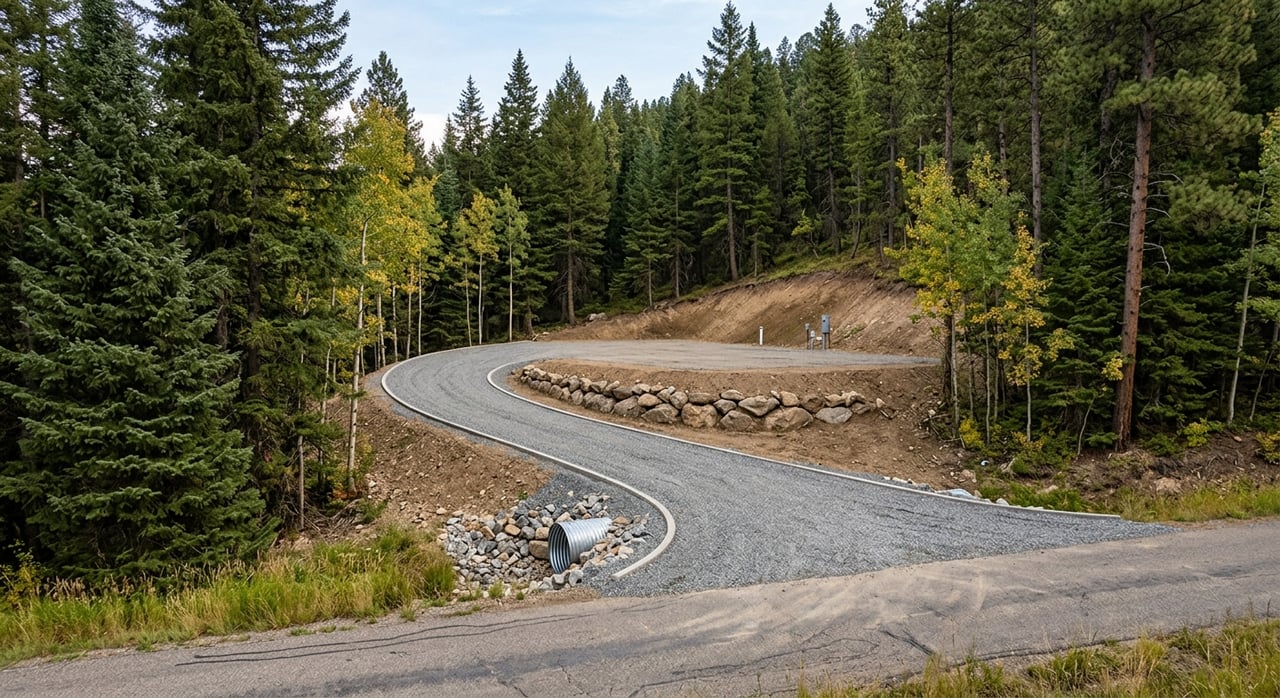
Buying raw land near Florissant and Lake George can feel exciting right up until the big questions start piling up. Can you build on it? Is there legal access? Will a well and septic work? If you are shopping for mountain land in this part of Colorado, those answers matter just as much as views and acreage. This guide will help you focus on the checks that come first, avoid common mistakes, and make a more confident decision. Let’s dive in.
Why land buying here is different
Land near Florissant and Lake George often looks similar at first glance, but the rules and real-world building conditions can vary a lot from parcel to parcel. According to the Teller County Growth Management Plan, this area includes public land, mountainous terrain, primitive roads, creeks, wetlands, and FEMA floodplain areas that can affect what is realistically buildable.
It is also important to remember that Florissant is in Teller County, while Lake George is a Park County community. That means two nearby properties may fall under different county rules. Before you get attached to a parcel, confirm which county it is in and which local departments oversee it.
Start with parcel and county
Your first step should be confirming the exact parcel, legal description, and county jurisdiction. A listing may mention Florissant or Lake George, but the actual county and parcel boundaries are what determine zoning, permits, and access requirements.
A helpful place to start is the Teller County online maps and property search tools. Teller County also notes that its property records database is updated daily but is not the official source, and zoning listed there may be inaccurate. The county says buyers should verify zoning directly with Planning and Zoning before relying on it.
Understand the zoning before you plan
One of the biggest mistakes first-time land buyers make is assuming a vacant parcel is automatically ready for the use they want. In reality, zoning may allow one use but limit another, or require additional review before approval.
In Teller County, a few common zoning categories show up often in land searches near Florissant.
A-1 agricultural acreage
A-1 zoning is intended for general farming, forestry, ranching, and related agricultural and residential uses. It is most commonly associated with larger acreage parcels and ranch-style properties. Teller County’s zoning text ties this district to acreage-based dwelling allowances and a 35-acre minimum lot size.
RR rural residential
RR zoning is designed for single-family lots large enough to support limited noncommercial livestock, poultry, and similar personal-use animals. Teller County also allows camping for less than 60 days per year in RR. Minimum lot size can vary based on slope and whether central water and sewer are available.
R-1 single-family residential
R-1 zoning is geared toward non-rural, non-agricultural single-family or duplex residential uses. If you want a more conventional homesite rather than a ranch or larger rural setup, this district may be closer to what you need.
R-1M mobile home lots
R-1M zoning is Teller County’s mobile-home lot district. If you are considering a manufactured home, do not assume any vacant parcel will work. You should verify that the lot is properly platted and approved for that use.
Check access and road status early
A parcel is only as useful as your ability to reach it legally and safely. In mountain areas, road conditions and driveway requirements can shape both cost and feasibility.
Teller County classifies roads in several ways, including principal arterials, collectors, local roads, and “other roads.” According to the county’s road classifications page, roads in that last category may be platted or dedicated for public use but not built to county standards. Until they are upgraded, the county may provide only emergency access and maintenance.
That can be a major issue for buyers who assume every road on a map is fully maintained. If the parcel connects to a county road, the county says you should contact Transportation for proposed access and even for building permits related to an existing driveway.
Driveways matter too. Teller County’s driveway and access guidelines explain that the property address must be posted, the driveway location must be flagged for inspection, residential openings are generally limited to about 20 feet in width, and only one access point is generally allowed per parcel.
Water and septic are not afterthoughts
For many vacant parcels, especially in rural and mountain settings, water and wastewater are two of the biggest unknowns. If the lot is not served by central water and sewer, you need to know whether a well and onsite wastewater system are realistic for your intended use.
Colorado’s Division of Water Resources well permitting page explains that the state handles permits for new and replacement wells and registration of existing wells. Well files may include allowable uses, original permit applications, and available construction and pump records.
For septic, Colorado’s OWTS framework places many systems under local review, and Teller County’s Environmental Health Department handles septic services locally. Teller County’s site-plan rules also require evidence that a septic permit has been applied for if well and septic do not yet exist. If you are planning to build, these utility questions need to be answered early, not after you close.
Study soils, slope, and drainage
A parcel can be beautiful and still be difficult to build on. Soil type, steep slopes, drainage patterns, and flood concerns all affect what may be possible and how much it may cost.
The NRCS soil survey guidance can help you evaluate limitations related to septic absorption fields, foundations, flooding, water tables, and slope. Teller County’s site-plan requirements also call for topography, drainage patterns, vegetation, soils, and slopes greater than 30% to be shown during building-permit review.
This is one reason “buildable” is not a yes-or-no label. A lot may allow a home in theory, but the actual homesite, driveway route, and septic area may still need careful planning.
Plan for wildfire mitigation
Wildfire risk is a practical part of land ownership in mountain communities. Trees, topography, driveway access, and vegetation all play a role in how a future homesite may need to be developed and maintained.
The Colorado State Forest Service recommends evaluating the home ignition zone, maintaining defensible space, and getting a homesite assessment from a forester or similar professional. For buyers, this matters because clearing, ongoing vegetation management, and access improvements can add to your long-term ownership costs.
Follow a smart research process
If you are buying land for the first time, it helps to use a fixed order instead of chasing every detail at once.
1. Confirm the parcel and county
Use county mapping and records tools to verify parcel boundaries, legal description, and jurisdiction. If your search area spans Florissant and Lake George, do not assume the same county rules apply to every listing.
2. Review plat, deed, and easements
Teller County’s site-plan rules require lot lines, easements, adjoining roads, and driveway or access locations to be shown. If no easements exist, that must be noted. If an easement’s location or use is unknown, the owner is responsible for identifying it.
3. Match zoning to your intended use
Think beyond “Can I build?” and ask more specific questions. Can you build a single-family home? Camp occasionally? Place a manufactured home? Keep personal-use animals? The zoning code separates permitted, administrative-review, conditional, and special uses.
4. Test water and septic assumptions
Do not rely on seller assumptions or old marketing remarks. Check whether a well is feasible, what the permit path looks like, and whether septic can be permitted for your intended use.
5. Budget for survey and possible engineering
Teller County’s site-plan rules generally require a boundary survey for building-permit review, with limited exceptions. The county may also require engineering review for drainage, access, retaining walls, and driveway locations.
6. Price the improvements, not just the land
A lower purchase price may still lead to a higher total cost if you need major driveway work, wildfire mitigation, or additional site preparation. In mountain markets, the usable cost of the land matters more than the sticker price alone.
Know who to call
When you are narrowing down a parcel, the right local office can save you time and money.
- Planning and Zoning can help verify zoning district, allowed uses, setbacks, overlays, and review requirements.
- The Building Division can explain the permit path and whether a parcel is in unincorporated Teller County.
- Environmental Health can help with septic feasibility, permit submittals, and septic file records.
- Teller County Transportation permit information can help with access and driveway requirements.
- The county Surveyor can be a useful source for boundary and right-of-way questions.
- The state Division of Water Resources can help with well records and permit questions.
Final thoughts for first-time land buyers
If you are buying land near Florissant and Lake George, the best first question is not whether the lot looks perfect. It is whether the parcel can support the use you actually want. In this corridor, county lines, zoning, access, wells, septic, slope, and wildfire conditions all shape the answer.
That is where local guidance can make a real difference. If you want help evaluating land opportunities in Teller County and the surrounding mountain market, connect with High Country Realty. Our team understands the practical side of lot and acreage purchases, from access and utility questions to the steps that help you move forward with confidence.
FAQs
What should you verify first when buying land near Florissant or Lake George?
- You should first confirm the exact parcel, legal description, and county jurisdiction because Florissant and Lake George area properties may fall under different county rules.
Why is zoning important for vacant land near Florissant?
- Zoning affects what uses may be allowed on the parcel, including whether you can build a home, place a manufactured home, camp, or keep certain animals.
How do you check road access for land in Teller County?
- You can review road classification and access requirements with Teller County because some roads may not be built to county standards and may receive limited maintenance.
What water and septic questions matter for mountain land buyers?
- If central services are not available, you should check whether a well permit is feasible and whether a septic system can be permitted for your intended use.
Do you need a survey before building on land near Florissant?
- In many cases, Teller County’s site-plan process generally requires a boundary survey for building-permit review, along with possible engineering review depending on the property conditions.